2/19/2014

Guillermo Rovirosa 50 Years On

Fifty years on from his death, Guillermo Rovirosa still accompanies us in our fight for justice for the poor of the Earth. He began his activism in favour of the poor in the 1940s, in a post-war Spain plagued by poverty. Working-class organisations had been politically exhausted and crushed.
 
Disillusioned and without hope for the future, many Marxist and anarco-syndicalists were influenced by Rovirosa’s testimony and converted to Christianity.
  
Rovirosa was the first militant and the driving force behind the HOAC. With the repression or destruction of many left-wing groups, working-class Christian activists were the only ones standing up against Franco’s dictatorship, seeking justice for the poor at the risk of losing their freedom, jobs, or respect.
His Christian radicalism was based on baptism and he believed that the emancipation of the poor would only come from their own struggle. Many disagreements within the Church followed as a result. He thought leaders or hierarchies were absurd, and criticised the ‘well-intentioned’ society of bourgeois and pietistic Christianity promoted by societal elites. He became poor himself and spread hope among the most exploited people in his country.
The activists created free publishing houses, workers’ buffets, and co-operatives made up of thousands of workers. They promoted political realities such as the law of Anonymous Labour Societies.
As a scientist, Rovirosa didn’t allow inventions to be put into practice if that meant jobs would be lost, as he saw the pain of an unemployed worker as much worse than losing a scientific advance. Meanwhile, in spite of his love for the Church, he was persecuted and slandered from within its ranks. He was also expelled from the National Commission of the HOAC (Hermandad Obrera de Acción Católica (Catholic Action Workers Brotherhood).
His revolutionary economic ideas and new paths towards liberation were all dedicated to the vast majority of humans living in poverty or conditions of exploitation. The Christian Cultural Movement today takes strength from his spirit and the path he lay out with his poverty, humility, and sacrifice. In the monstrous system of imperialist economic savagery under which we live today, the need for the working-class militancy encouraged by Rovirosa is more apparent than ever. This system must be defeated, but the movement to defeat it must be led by the oppressed themselves.

Publishing house of Self-management magazine

1/14/2014

FREEDOM: Rudolf Rocker


Freedom is the very essence of life, the impelling force in all intellectual and social development, the creator of every new outlook for the future of mankind. The liberation of man from economic exploitation and from intellectual and political oppression, which finds its finest expression in the world-philosophy of Anarchism, is the first prerequisite for the evolution of a higher social culture and a new humanity


Political rights do not exist because they have been legally set down on a piece of paper, but only when they have become the ingrown habit of a people, and when any attempt to impair them will meet with the violent resistance of the populace. Where this is not the case, there is no help in any parliamentary Opposition or any Platonic appeals to the constitution. One compels respect from others when he knows how to defend his dignity as a human being. This is not only true in private life, it has always been the same in political life as well.The peoples owe all the political rights and privileges which we enjoy today in greater or lesser measure, not to the good will of their governments, but to their own strength.

10/18/2013

Working Class Culture: The Culture of the Poor


Certain topics fail to enter our historical memory, or are barely mentioned. Such is the case with the working class culture that arose from the labour movement. There is a premeditated desire to ensure that the history of solidarity between the poor is permanently hidden, along with an attempt to hide how they have been capable of being agents of change in their own lives, constructing amazing realities from small beginnings.
Poor working class militants didn’t look exclusively to improve their material lot. Above all, they sought to generate a new culture that allowed them to create and sustain organisations that could bring about political and economic revolution. This coordinated action is summarised very well in the phrase of one member of the First International: “Man lives only from political and economic demands”. Benoit Malon continues by saying that “a political and economic transformation cannot be separated from a moral revolution”. This spirit remains intact in the slogan of the Spaniards present at that same internationalist meeting: “Misery and ignorance are the main enemies of the people. Wage war on ignorance and misery! To fight ignorance, revolutionise newspapers and books; to end misery, encourage cooperation and collaboration”.
The components of this working-class culture had an overwhelming sense of morality. This explains why the most conscious militants placed immense importance on their own personal conduct and lifestyle. This was an expression of the comprehensive character of the culture they defended. Ricardo Mella illustrates this morality: “I remember the courageous combatants of the past with great admiration! They were serious, upright, of unfailing morality, and capable of great audacity without resorting to ridiculous rudeness. They were thoughtful and reflective to the point of never compromising the interests of the proletariat, fighting for their ideas with determination and without weakness. They spread their ideas tirelessly but without rowdiness, and when the moments of struggle arrived, they would never turn their backs or beg for mercy if defeated.
The history of the workers’ movement has been a history of liberation – of changing situations of oppression and injustice into situations of emancipation. However, we must not hide the fact that it has also been a history of betrayal, with workers’ organisations choosing bureaucracy over commitment to activism, and alliance with the powers that be over freedom.

10/03/2013

Qatar: the migrant workers forced to work for no pay in World Cup host country - video


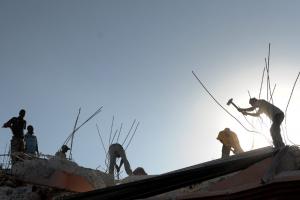
  Qatar, one of the richest countries on the planet, will be hosting the World Cup in 2022. But much of the Gulf state's expansion is being built by some of the poorest migrant workers in the world. In the worst cases, employees are not being paid and work in conditions of forced labour. Each month dozens of young Nepalese migrant workers are returning home in coffins

9/23/2013

"The leadership has failed. I believe in masses"

Luxemburg's last known words, written on the evening of her murder, were about her belief in the masses, and in what she saw as the inevitability of revolution:
Luxemburg speaking to a crowd in 1907.
"The leadership has failed. Even so, the leadership can and must be recreated from the masses and out of the masses. The masses are the decisive element, they are the rock on which the final victory of the revolution will be built. The masses were on the heights; they have developed this 'defeat' into one of the historical defeats which are the pride and strength of international socialism. And that is why the future victory will bloom from this 'defeat'.
'Order reigns in Berlin!' You stupid henchmen! Your 'order' is built on sand. Tomorrow the revolution will already 'raise itself with a rattle' and announce with fanfare, to your terror:I was, I am, I shall be

Rosa Luxemburg