
3/19/2015
THE PARIS COMMUNE
144 years ago today, workers took over Paris and tried for the first time to run a society in the interest of the many.

5/27/2014
1919-2014: 95th anniversary of the death of Rosa Luxemburg
 |
| Rosa Luxemburg grave in Berlín |
"Freedom is always the freedom of the one who thinks differently (Freiheit ist immer Freiheit der Andersdenkenden)
Freedom only for the supporters of the government, only for the members of a party – however numerous they may be – is no freedom at all. Freedom is always the freedom of the dissenter. Not because of the fanaticism of "justice", but rather because all that is instructive, wholesome, and purifying in political freedom depends on this essential characteristic, and its effects cease to work when "freedom" becomes a privilege."
"Without general elections, without unrestricted freedom of press and assembly, without a free struggle of opinion, life dies out in every public institution, becomes a mere semblance of life, in which only the bureaucracy remains as the active element".
4/21/2014
PEOPLE´S HISTORY

"History is the memory of states," wrote Henry Kissinger in
his first book, A World Restored in which he proceeded to tell the history of
nineteenth-century Europe from the viewpoint of the leaders of Austria and
England, ignoring the millions who suffered from those statesmen's policies. From his
standpoint, the "peace" that Europe had before the French Revolution was "restored" by
the diplomacy of a few national leaders. But for factory workers in England, farmers in France,
colored people in Asia and Africa, women and
children everywhere except in the upper classes, it was a world of
conquest, violence, hunger, exploitation a world not restored but
disintegrated.
My viewpoint, in telling the history of the United States, is different:
that we must not accept the memory of
states as our own. Nations are not communities and never have been, The history of any country, presented as the
history of a family, conceals fierce conflicts of interest (sometimes exploding, most often
repressed) between conquerors and conquered,
masters and slaves, capitalists and workers, dominators and dominated in
race and sex. And in such a world of
conflict, a world of victims and executioners, it is the job of thinking people, as Albert Camus suggested, not to be
on the side of the executioners.
Howard Zinn.
4/09/2014
They Call it “Child Labour” but it is Child Slavery
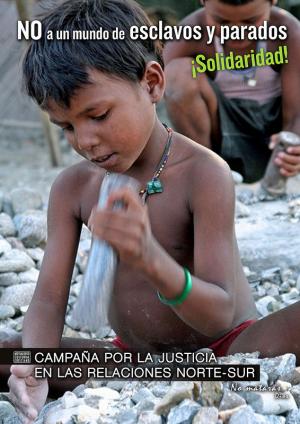
The Bolivian President Evo Morales, supposed champion of “21st Century Socialism”, has declared himself partly supportive of “child labour”. This debate is not new. Associations of “child labourers” demand “fair” conditions for jobs that have “always existed” and that are considered necessary to help to end the poverty of their families.
By saying that work helps to form a “social conscience”, the President defends a current that, instead of favouring the abolition and total eradication of child labour, proposes its regulation.
Confusion is born from the very moment in which we accept the term “child labour” instead of calling it what it actually is – exploitation and child slavery. And, in Bolivia, there are over 850,000 children between the ages of 5 and 14 who are exploited in this way. A large part of the blame for this confusion lies with international organisations, like the ILO, which itself doesn’t stop talking about “child labour” and the “worst forms of child labour”. It is part of the bureaucratic and materialist vision that oozes from each speech given by organisations that have always served to defend the ruthlessness and criminality of capitalist imperialism that is always behind their decisions. Morales’ comments about “child labour” represent this contradiction.
Work in itself is not reprehensible. We have always believed that children should “work” on what they ought to: playing and developing themselves. But each child forced to work to satisfy their most basic needs, and those of their families, is condemned to forced labour. And this is often the result of the lack of job opportunities for their parents, or the lack of a dignified wage in the jobs they have that would allow them to escape poverty. Over sixty percent of the world’s adult workers live in such a situation, and in Bolivia it represents seventy percent of adult workers. And while this situation persists, so will the exploitation of children in the labour market – perpetuating in this way the disgusting and criminal economic system of capitalism.
Publishing house of Self-management magazine
Publishing house of Self-management magazine
2/19/2014
Guillermo Rovirosa 50 Years On
 Fifty years on from his death, Guillermo Rovirosa still accompanies us in our
fight for justice for the poor of the Earth. He began his activism in favour of
the poor in the 1940s, in a post-war Spain plagued by poverty. Working-class
organisations had been politically exhausted and crushed.
Fifty years on from his death, Guillermo Rovirosa still accompanies us in our
fight for justice for the poor of the Earth. He began his activism in favour of
the poor in the 1940s, in a post-war Spain plagued by poverty. Working-class
organisations had been politically exhausted and crushed.
Disillusioned and without hope for the
future, many Marxist and anarco-syndicalists were influenced by Rovirosa’s
testimony and converted to Christianity.
Rovirosa was the first militant and the
driving force behind the HOAC. With the repression or destruction of many
left-wing groups, working-class Christian activists were the only ones standing
up against Franco’s dictatorship, seeking justice for the poor at the risk of
losing their freedom, jobs, or respect.
His Christian radicalism was based on
baptism and he believed that the emancipation of the poor would only come from
their own struggle. Many disagreements within the Church followed as a result.
He thought leaders or hierarchies were absurd, and criticised the
‘well-intentioned’ society of bourgeois and pietistic Christianity promoted by
societal elites. He became poor himself and spread hope among the most exploited
people in his country.
The activists created free publishing houses, workers’
buffets, and co-operatives made up of thousands of workers. They promoted
political realities such as the law of Anonymous Labour Societies.
As a scientist, Rovirosa didn’t allow
inventions to be put into practice if that meant jobs would be lost, as he saw
the pain of an unemployed worker as much worse than losing a scientific advance.
Meanwhile, in spite of his love for the Church, he was persecuted and slandered
from within its ranks. He was also expelled from the National Commission of the
HOAC (Hermandad Obrera de Acción Católica (Catholic Action Workers Brotherhood).
His revolutionary economic ideas and new
paths towards liberation were all dedicated to the vast majority of humans
living in poverty or conditions of exploitation. The Christian Cultural Movement
today takes strength from his spirit and the path he lay out with his poverty,
humility, and sacrifice. In the monstrous system of imperialist economic
savagery under which we live today, the need for the working-class militancy
encouraged by Rovirosa is more apparent than ever. This system must be defeated,
but the movement to defeat it must be led by the oppressed
themselves.
Publishing house of Self-management magazine
Publishing house of Self-management magazine
1/14/2014
FREEDOM: Rudolf Rocker

Freedom is the very essence of life, the impelling force in all
intellectual and social development, the creator of every new outlook
for the future of mankind. The liberation of man from economic
exploitation and from intellectual and political oppression, which finds
its finest expression in the world-philosophy of Anarchism, is the
first prerequisite for the evolution of a higher social culture and a
new humanity
Political rights do not exist because they have been legally set
down on a piece of paper, but only when they have become the ingrown
habit of a people, and when any attempt to impair them will meet with
the violent resistance of the populace. Where this is not the case,
there is no help in any parliamentary Opposition or any Platonic appeals
to the constitution. One compels respect from others when he knows how
to defend his dignity as a human being. This is not only true in private
life, it has always been the same in political life as well.The peoples owe all the political rights and privileges which we
enjoy today in greater or lesser measure, not to the good will of their
governments, but to their own strength.
10/18/2013
Working Class Culture: The Culture of the Poor
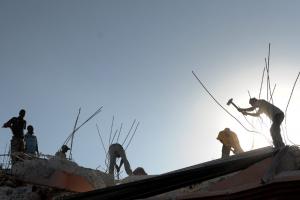
Certain topics fail to enter our historical memory, or are barely mentioned. Such is the case with the working class culture that arose from the labour movement. There is a premeditated desire to ensure that the history of solidarity between the poor is permanently hidden, along with an attempt to hide how they have been capable of being agents of change in their own lives, constructing amazing realities from small beginnings.
Poor working class militants didn’t look exclusively to improve their material lot. Above all, they sought to generate a new culture that allowed them to create and sustain organisations that could bring about political and economic revolution. This coordinated action is summarised very well in the phrase of one member of the First International: “Man lives only from political and economic demands”. Benoit Malon continues by saying that “a political and economic transformation cannot be separated from a moral revolution”. This spirit remains intact in the slogan of the Spaniards present at that same internationalist meeting: “Misery and ignorance are the main enemies of the people. Wage war on ignorance and misery! To fight ignorance, revolutionise newspapers and books; to end misery, encourage cooperation and collaboration”.
The components of this working-class culture had an overwhelming sense of morality. This explains why the most conscious militants placed immense importance on their own personal conduct and lifestyle. This was an expression of the comprehensive character of the culture they defended. Ricardo Mella illustrates this morality: “I remember the courageous combatants of the past with great admiration! They were serious, upright, of unfailing morality, and capable of great audacity without resorting to ridiculous rudeness. They were thoughtful and reflective to the point of never compromising the interests of the proletariat, fighting for their ideas with determination and without weakness. They spread their ideas tirelessly but without rowdiness, and when the moments of struggle arrived, they would never turn their backs or beg for mercy if defeated.
The history of the workers’ movement has been a history of liberation – of changing situations of oppression and injustice into situations of emancipation. However, we must not hide the fact that it has also been a history of betrayal, with workers’ organisations choosing bureaucracy over commitment to activism, and alliance with the powers that be over freedom.
10/03/2013
Qatar: the migrant workers forced to work for no pay in World Cup host country - video
Qatar, one of the richest countries on the planet, will be hosting the World Cup in 2022. But much of the Gulf state's expansion is being built by some of the poorest migrant workers in the world. In the worst cases, employees are not being paid and work in conditions of forced labour. Each month dozens of young Nepalese migrant workers are returning home in coffins
9/23/2013
"The leadership has failed. I believe in masses"
Luxemburg's last known words, written on the evening of her murder, were about her belief in the masses, and in what she saw as the inevitability of revolution:
Rosa Luxemburg

"The leadership has failed. Even so, the leadership can and must be recreated from the masses and out of the masses. The masses are the decisive element, they are the rock on which the final victory of the revolution will be built. The masses were on the heights; they have developed this 'defeat' into one of the historical defeats which are the pride and strength of international socialism. And that is why the future victory will bloom from this 'defeat'.
Luxemburg speaking to a crowd in 1907.
'Order reigns in Berlin!' You stupid henchmen! Your 'order' is built on sand. Tomorrow the revolution will already 'raise itself with a rattle' and announce with fanfare, to your terror:I was, I am, I shall be
Rosa Luxemburg

9/12/2013


8/19/2013
To be GOVERNED
 To be GOVERNED is to be watched, inspected, spied upon, directed, law-driven, numbered, regulated, enrolled, indoctrinated, preached at, controlled, checked, estimated, valued, censured, commanded, by creatures who have neither the right nor the wisdom nor the virtue to do so. To be GOVERNED is to be at every operation, at every transaction noted, registered, counted, taxed, stamped, measured, numbered, assessed, licensed, authorized, admonished, prevented, forbidden, reformed, corrected, punished. It is, under pretext of public utility, and in the name of the general interest, to be place[d] under contribution, drilled, fleeced, exploited, monopolized, extorted from, squeezed, hoaxed, robbed; then, at the slightest resistance, the first word of complaint, to be repressed, fined, vilified, harassed, hunted down, abused, clubbed, disarmed, bound, choked, imprisoned, judged, condemned, shot, deported, sacrificed, sold, betrayed; and to crown all, mocked, ridiculed, derided, outraged, dishonored. That is government; that is its justice; that is its morality.
Pierre-Joseph Proudhon
8/15/2013
few own the many. HELEN KELLER
 "The few own the many because they possess the means of livelihood of all ...
The country is governed for the richest, for the corporations, the bankers, the
land speculators, and for the exploiters of labor. The majority of mankind are
working people. So long as their fair demands - the ownership and control of
their livelihoods - are set at naught, we can have neither men's rights nor
women's rights. The majority of mankind is ground down by industrial oppression
in order that the small remnant may live in ease."
"The few own the many because they possess the means of livelihood of all ...
The country is governed for the richest, for the corporations, the bankers, the
land speculators, and for the exploiters of labor. The majority of mankind are
working people. So long as their fair demands - the ownership and control of
their livelihoods - are set at naught, we can have neither men's rights nor
women's rights. The majority of mankind is ground down by industrial oppression
in order that the small remnant may live in ease."
HELEN KELLER
IWW member, 1911
8/02/2013
Peter Kropotkin, Mutual Aid: A Factor of Evolution
In the animal world we have seen that the vast majority of species live in societies, and that they find in association the best arms for the struggle for life: understood, of course, in its wide Darwinian sense – not as a struggle for the sheer means of existence, but as a struggle against all natural conditions unfavourable to the species. The animal species, in which individual struggle has been reduced to its narrowest limits, and the practice of mutual aid has attained the greatest development, are invariably the most numerous, the most prosperous, and the most open to further progress. The mutual protection which is obtained in this case, the possibility of attaining old age and of accumulating experience, the higher intellectual development, and the further growth of sociable habits, secure the maintenance of the species, its extension, and its further progressive evolution. The unsociable species, on the contrary, are doomed to decay.

Peter Kropotkin, Mutual Aid: A Factor of Evolution (1902)
8/01/2013
Questions from a Worker who Reads’ by Bertolt Brecht
_Berthold_Brecht.jpg) |
| Statue Berthold-Brecht-Platz (Mitte) |
In the books you will find the names of kings.
Did the kings haul up the lumps of rock?
And Babylon, many times demolished
Who raised it up so many times? In what houses
Of gold-glittering Lima did the builders live?
Where, the evening that the Wall of China was finished
Did the masons go? Great Rome
Of gold-glittering Lima did the builders live?
Where, the evening that the Wall of China was finished
Did the masons go? Great Rome
Is full of triumphal arches. Who erected them? Over whom
Did the Caesars triumph? Had Byzantium, much praised in song
Only palaces for its inhabitants? Even in fabled Atlantis
The night the ocean engulfed it
The drowning still bawled for their slaves.
The young Alexander conquered India.
Was he alone?
The drowning still bawled for their slaves.
The young Alexander conquered India.
Was he alone?
Caesar beat the Gauls.
Did he not have even a cook with him?
Philip of Spain wept when his armada
Went down. Was he the only one to weep?
Did he not have even a cook with him?
Philip of Spain wept when his armada
Went down. Was he the only one to weep?
Frederick the Second won the Seven Years War. Who
Else won it?
Every page a victory.
Who cooked the feast for the victors?
Else won it?
Every page a victory.
Who cooked the feast for the victors?
Every ten years a great man.
Who paid the bill?
So many reports.
So many questions.
Who paid the bill?
So many reports.
So many questions.
‘Questions from a Worker who Reads’ by Bertolt Brecht
5/01/2013
1 May: International Workers' Day
 International Workers' Day (also known as May Day) is a celebration of the international labour movement. May 1 is a national holiday in more than 80 countries and celebrated unofficially in many other countries.
International Workers' Day is the commemoration of the 1886 Haymarket massacre in Chicago. The police were trying to disperse a public assembly during a general strike for the eight-hour workday, when an unidentified person threw a bomb at them. The police reacted by firing on the workers, killing four demonstrators. "Reliable witnesses testified that all the pistol flashes came from the center of the street, where the police were standing, and none from the crowd. Moreover, initial newspaper reports made no mention of firing by civilians. A telegraph pole at the scene was filled with bullet holes, all coming from the direction of the police."
In 1889, the first congress of the Second International, meeting in Paris for the centennial of the French Revolution and the Exposition Universelle, called for international demonstrations on the 1890 anniversary of the Chicago protests. May Day was formally recognized as an annual event at the International's second congress in 1891.
Subsequently, the May Day Riots of 1894 occurred. In 1904, the International Socialist Conference meeting in Amsterdam called on "all Social Democratic Party organizations and trade unions of all countries to demonstrate energetically on May First for the legal establishment of the 8-hour day, for the class demands of the proletariat, and for universal peace." The congress made it "mandatory upon the proletarian organizations of all countries to stop work on May 1, wherever it is possible without injury to the workers."
In many countries, the working classes sought to make May Day an official holiday, and their efforts largely succeeded. May Day has long been a focal point for demonstrations.
In the United States and Canada, however, the official holiday for workers is Labor Day in September.
In 1955, the Catholic Church dedicated May 1 to "Saint Joseph The Worker". The Catholic Church considers Saint Joseph the patron saint of workers and craftsmen.
However, do our students know why 1st May is a day off?
Lesson Plan: 1 May, International Workers' Day
Objectives
- Getting students to understand their connection to the history of organized labour.
- Getting students to reflect on the organized non-violent fight of international workers’ in order to get rights we are currently losing.
- Getting students to consider ways to apply what they have learned to improve working conditions today.
International Workers' Day (also known as May Day) is a celebration of the international labour movement. May 1 is a national holiday in more than 80 countries and celebrated unofficially in many other countries.
International Workers' Day is the commemoration of the 1886 Haymarket massacre in Chicago. The police were trying to disperse a public assembly during a general strike for the eight-hour workday, when an unidentified person threw a bomb at them. The police reacted by firing on the workers, killing four demonstrators. "Reliable witnesses testified that all the pistol flashes came from the center of the street, where the police were standing, and none from the crowd. Moreover, initial newspaper reports made no mention of firing by civilians. A telegraph pole at the scene was filled with bullet holes, all coming from the direction of the police."
In 1889, the first congress of the Second International, meeting in Paris for the centennial of the French Revolution and the Exposition Universelle, called for international demonstrations on the 1890 anniversary of the Chicago protests. May Day was formally recognized as an annual event at the International's second congress in 1891.
Subsequently, the May Day Riots of 1894 occurred. In 1904, the International Socialist Conference meeting in Amsterdam called on "all Social Democratic Party organizations and trade unions of all countries to demonstrate energetically on May First for the legal establishment of the 8-hour day, for the class demands of the proletariat, and for universal peace." The congress made it "mandatory upon the proletarian organizations of all countries to stop work on May 1, wherever it is possible without injury to the workers."
In many countries, the working classes sought to make May Day an official holiday, and their efforts largely succeeded. May Day has long been a focal point for demonstrations.
In the United States and Canada, however, the official holiday for workers is Labor Day in September.
In 1955, the Catholic Church dedicated May 1 to "Saint Joseph The Worker". The Catholic Church considers Saint Joseph the patron saint of workers and craftsmen.
However, do our students know why 1st May is a day off?
Lesson Plan: 1 May, International Workers' Day
Objectives
- Getting students to understand their connection to the history of organized labour.
- Getting students to reflect on the organized non-violent fight of international workers’ in order to get rights we are currently losing.
- Getting students to consider ways to apply what they have learned to improve working conditions today.
4/25/2013


Subscribe to:
Posts (Atom)